Gallery · NGC 1333
Reflection nebula and the Perseus molecular cloud
Single-image broadband with hydrogen, HaLRGB
- Integration
- 28.3 h
- Constellation
- Perseus
- Optics
- SharpStar 94EDPH refractor
- Camera
- QHY268M
- Field of view
- 3.3° × 2.2°
- Dates
- 11 November to 25 November 2025
Description
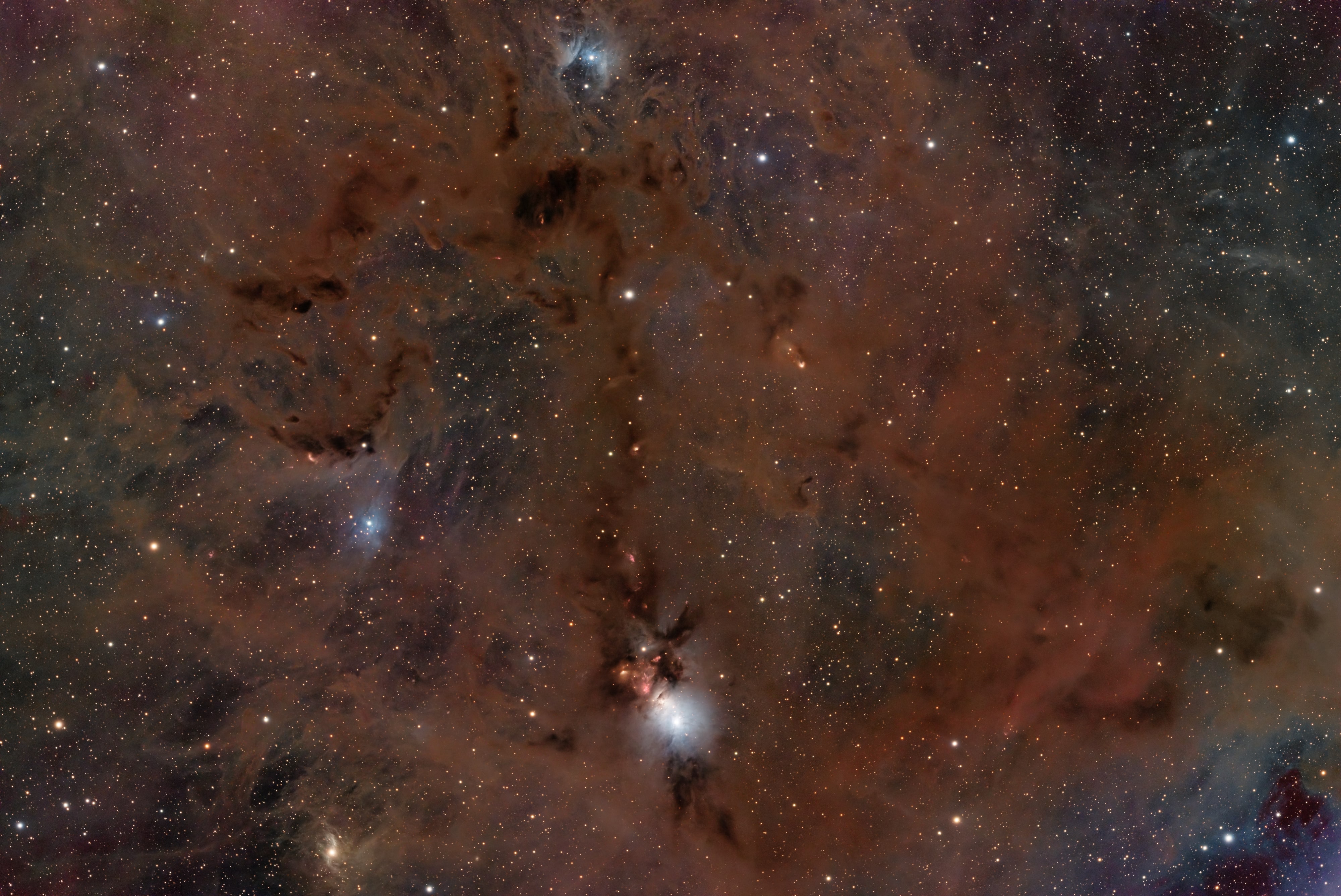
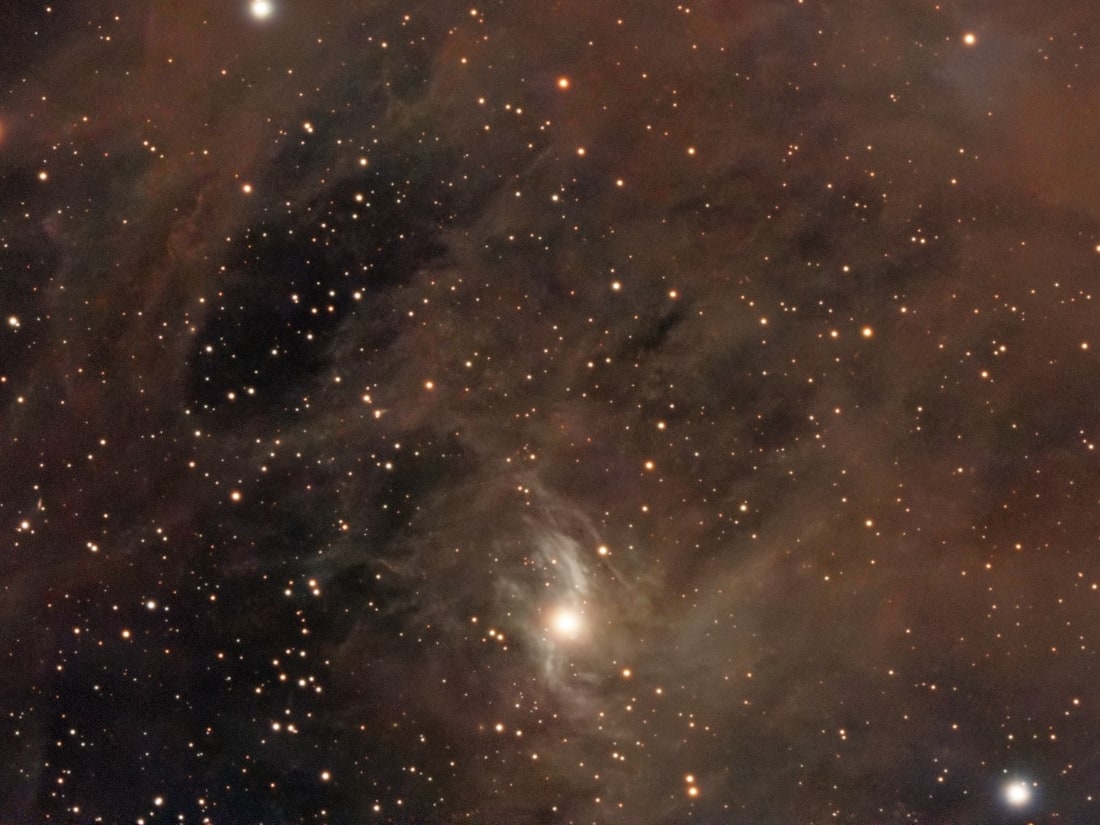
This 3.3° by 2.2° field covers part of the Perseus molecular cloud, about 1,000 light-years away: an immense expanse of cold, brown dust where stars are being born.
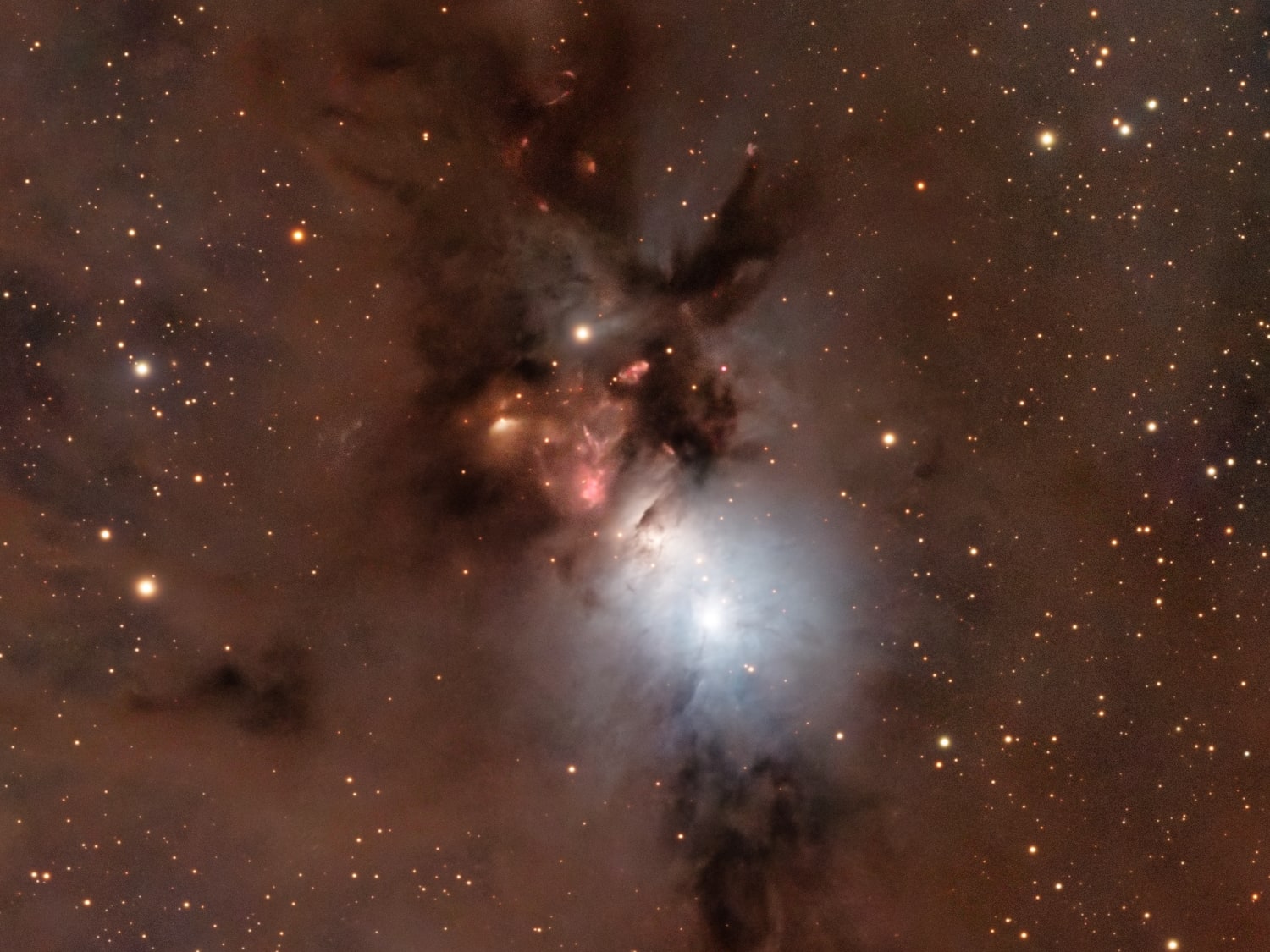
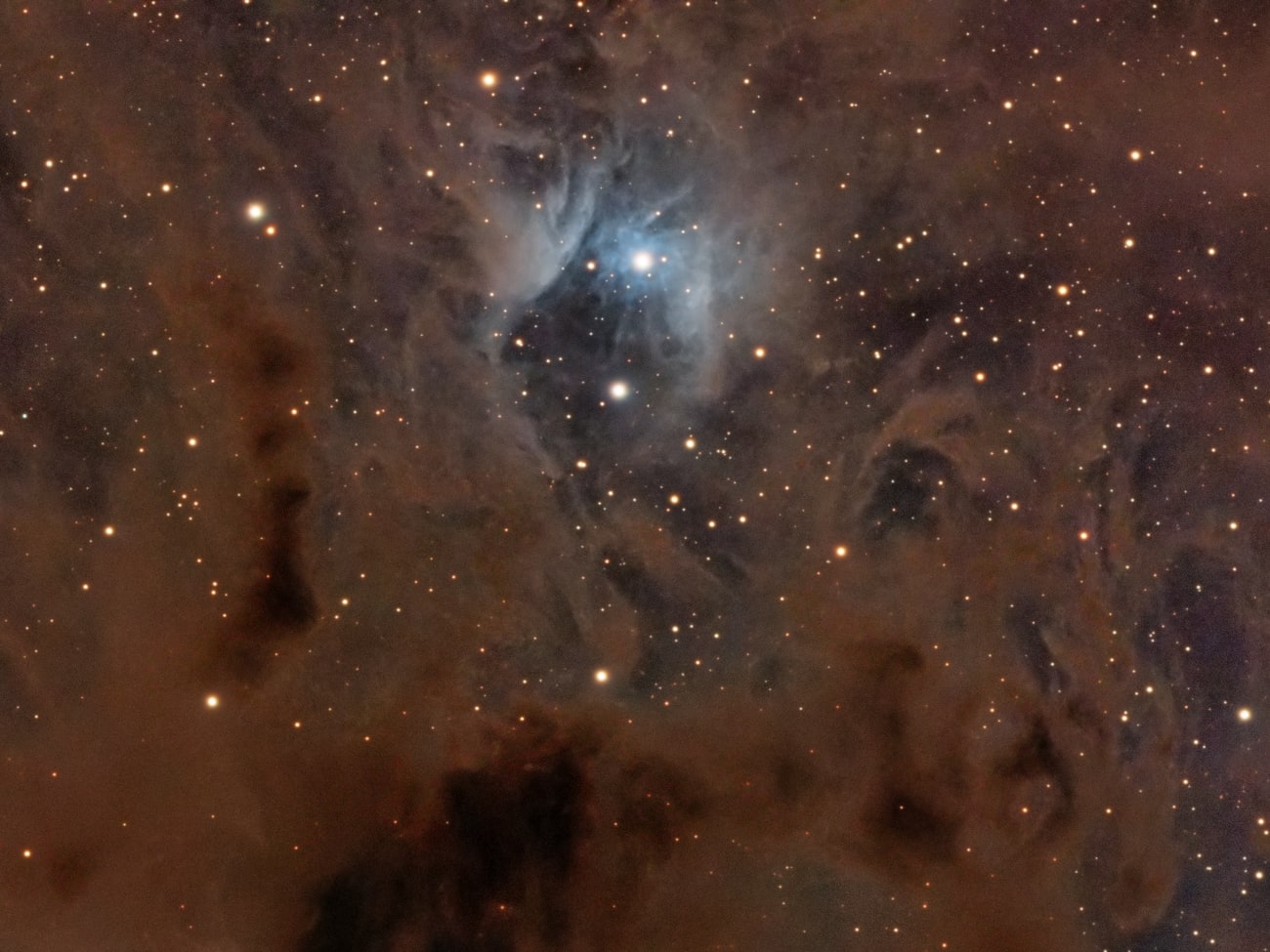
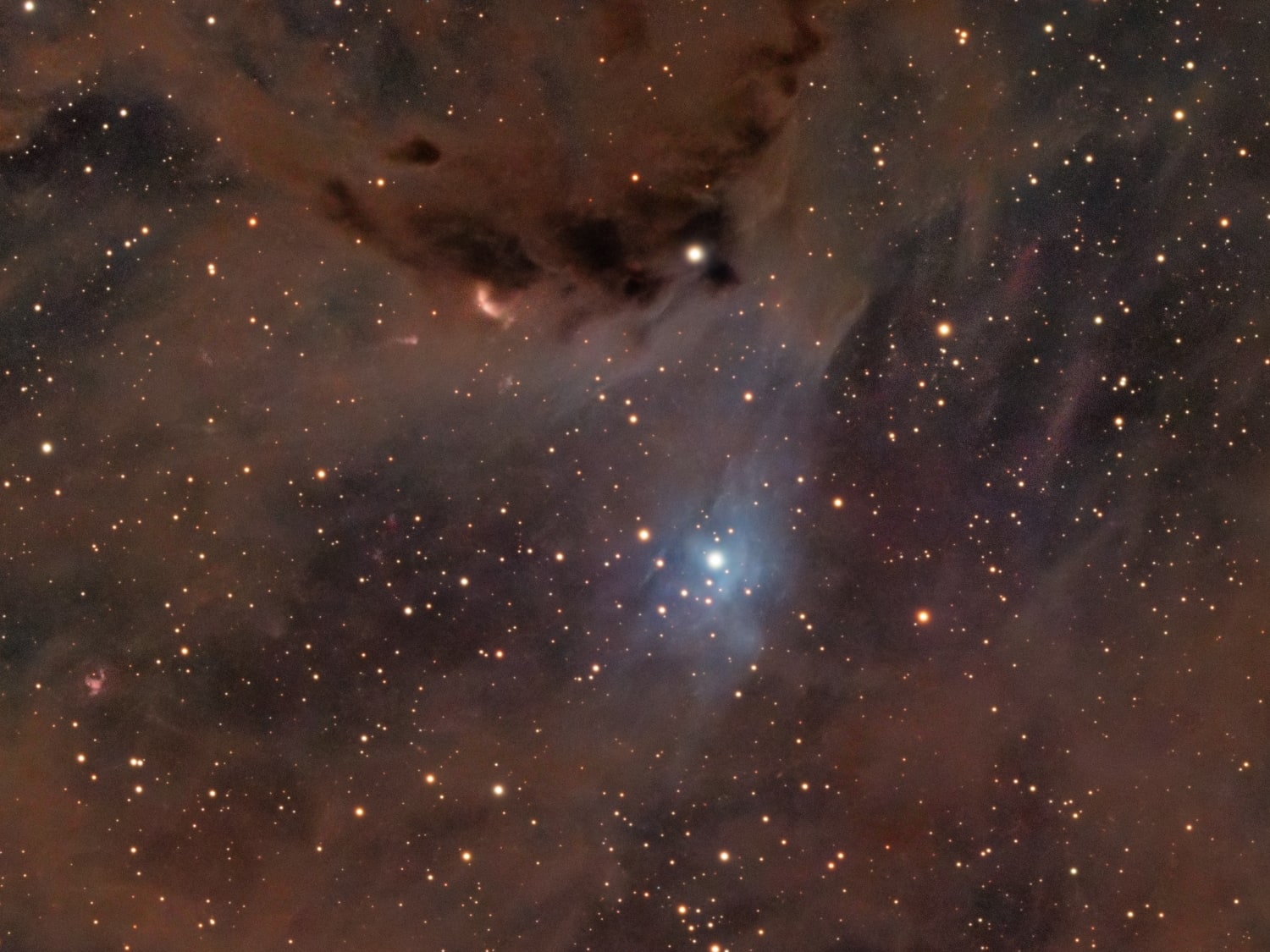
NGC 1333 is the bright, bluish nebula at the bottom, in the centre: dust lit by young stars. Right next to it, small red patches betray jets of gas ejected by forming stars (Herbig-Haro objects), which the Ha filter brings out. Other small blue reflection nebulae are scattered across the field, and many dark clouds stand out against the background.
The colours are close to the real ones: they were calibrated on the stars in the field, and the hydrogen only strengthens the red.
This image was acquired in collaboration with Renaud Venne-Landry.
Finding the field
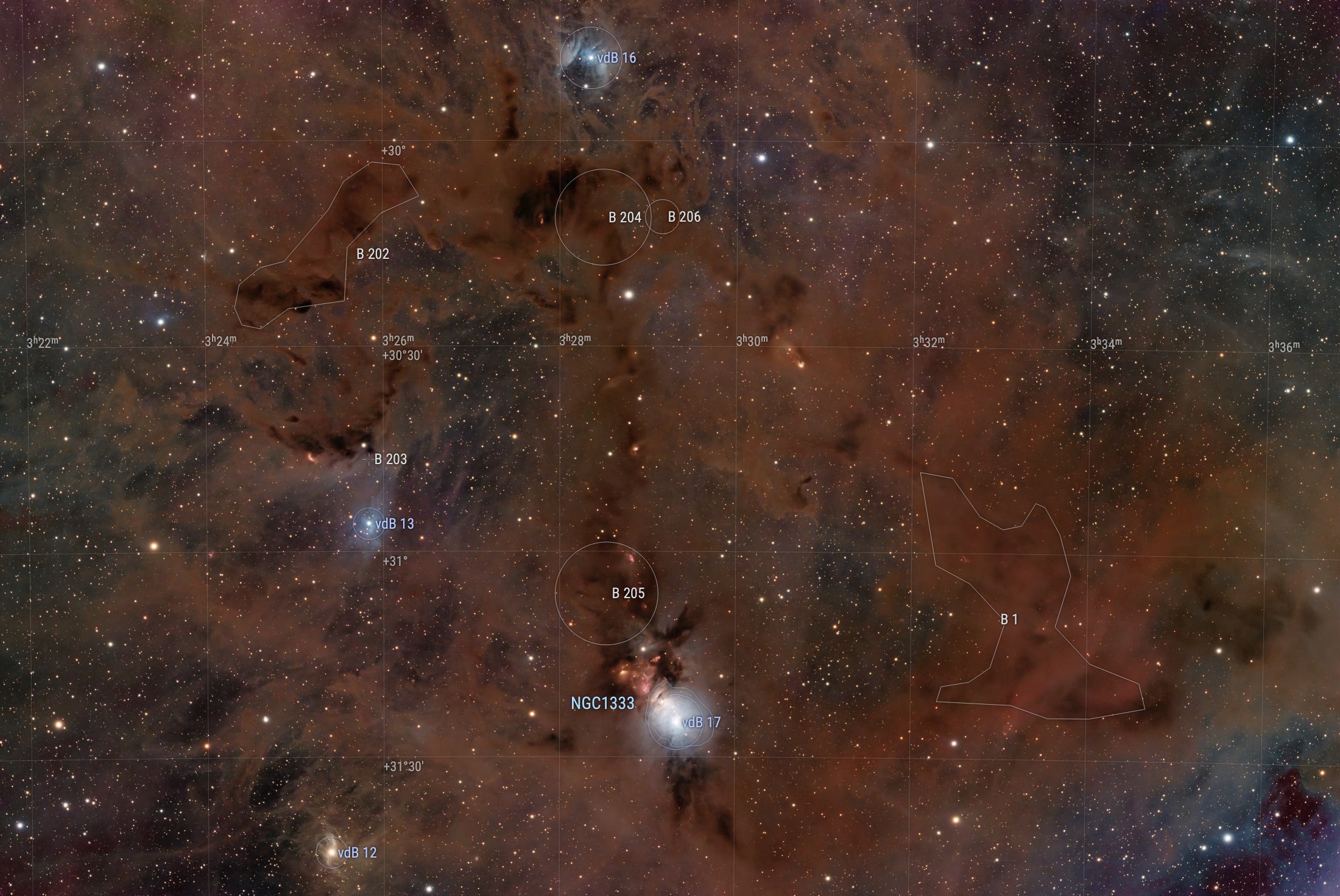
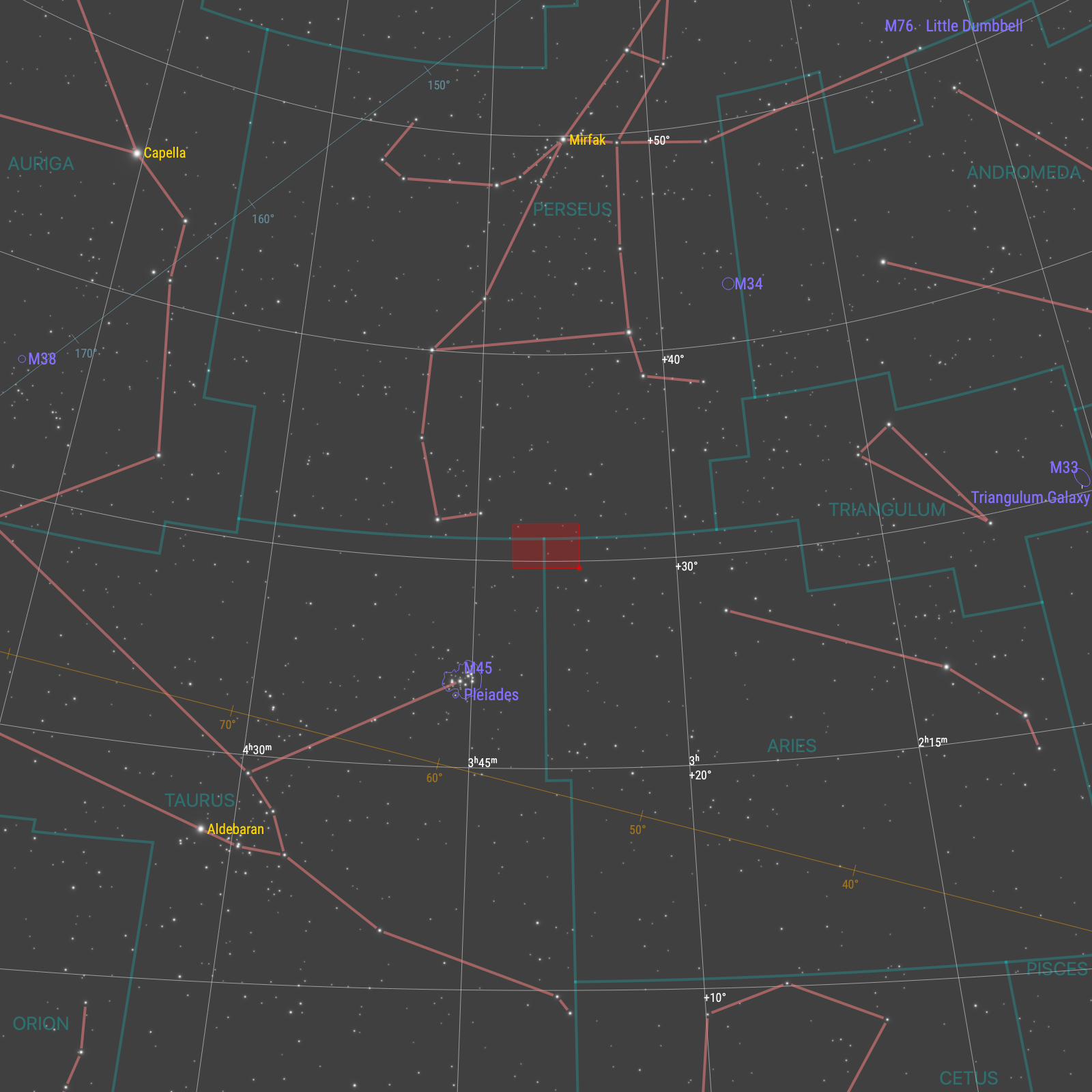
Annotation and chart generated in PixInsight (AnnotateImage, FindingChart) from the image's astrometric solution.
Acquisition
- Location
- Starfront remote site, Texas (31°32'51" N, 99°22'55" W)
- Period
- 11 November to 25 November 2025
- Camera
- QHY268M (monochrome), gain 56, offset 25, High Gain 2CMS mode, cooled to 0 °C, 1×1 binning
- Optics
- SharpStar 94EDPH refractor (94 mm aperture) with its dedicated reducer, 409 mm focal length (f/4.4)
- Image scale
- 1.90"/pixel (3.76 µm pixels)
- Filters
- L, R, G, B, Ha
- Software
- Voyager (RoboTarget)
Frames kept (all available raw frames were stacked):
| Filter | Frames | Sub-exposure | Total | Period |
|---|---|---|---|---|
| L | 99 | 180 s | 5.0 h | 11 November to 15 November 2025 |
| R | 100 | 180 s | 5.0 h | 11 November to 15 November 2025 |
| G | 100 | 180 s | 5.0 h | 13 November to 24 November 2025 |
| B | 100 | 180 s | 5.0 h | 13 November to 24 November 2025 |
| Ha | 50 | 600 s | 8.3 h | 14 November to 25 November 2025 |
- Integration time
- 28.3 h (449 frames).
Final image
- Dimensions
- 6210 × 4152 pixels (25.8 megapixels), after cropping the edges
- Field
- about 3.3° × 2.2°
- Field centre
- RA 3h 29m, Dec +30° 43'
Processing
Done entirely in PixInsight 1.9.6, starting from the raw frames.
Preprocessing (per filter)
- Calibration: 180 s and 600 s master darks at 0 °C; L, R, G master flats from October 2025; B and Ha master flats at −15 °C from December 2025.
- Frame alignment, local normalization, stacking.
- Astrometric solution of each stack.
Preparation
- RGB combination and colour calibration on the stars in the field (SpectrophotometricColorCalibration, Gaia catalogue).
- Common cropping of the edges.
Linear processing
- Light gradient correction (AutomaticBackgroundExtractor, degree-1 polynomial).
- BlurXTerminator (deconvolution), NoiseXTerminator (noise reduction), StarXTerminator (separation of stars and nebulae).
Non-linear processing
- Background neutralization, then linked stretch of the three colours, target background level 0.20.
- Injection of the Ha into the red and into the luminance.
- Combination of the luminance with the colour (LRGB).
- Green toned down (SCNR 0.7), contrast and saturation curves.
- DarkStructureEnhance, two passes, to strengthen the dark nebulae.
- Reintegration of the stars, stretched less than the nebulae.
Image: Martin Magnan.